DBJ METHOD Skills#
Operational Model for AI Readiness
Intent#
This site encodes DBJ.METHOD as Claude Skills, so that any Claude instance can apply the method consistently, using terminology with no exhausting reinterpretation, instead of relying on ad-hoc explanation each time.
Each skill is a self-contained layer of the method, kept deliberately separate rather than merged, because the operational model (and source material) itself keeps them as distinct:
- dbj-taxonomy — Where does a concern sit? (4 Categories × 4 Capabilities)
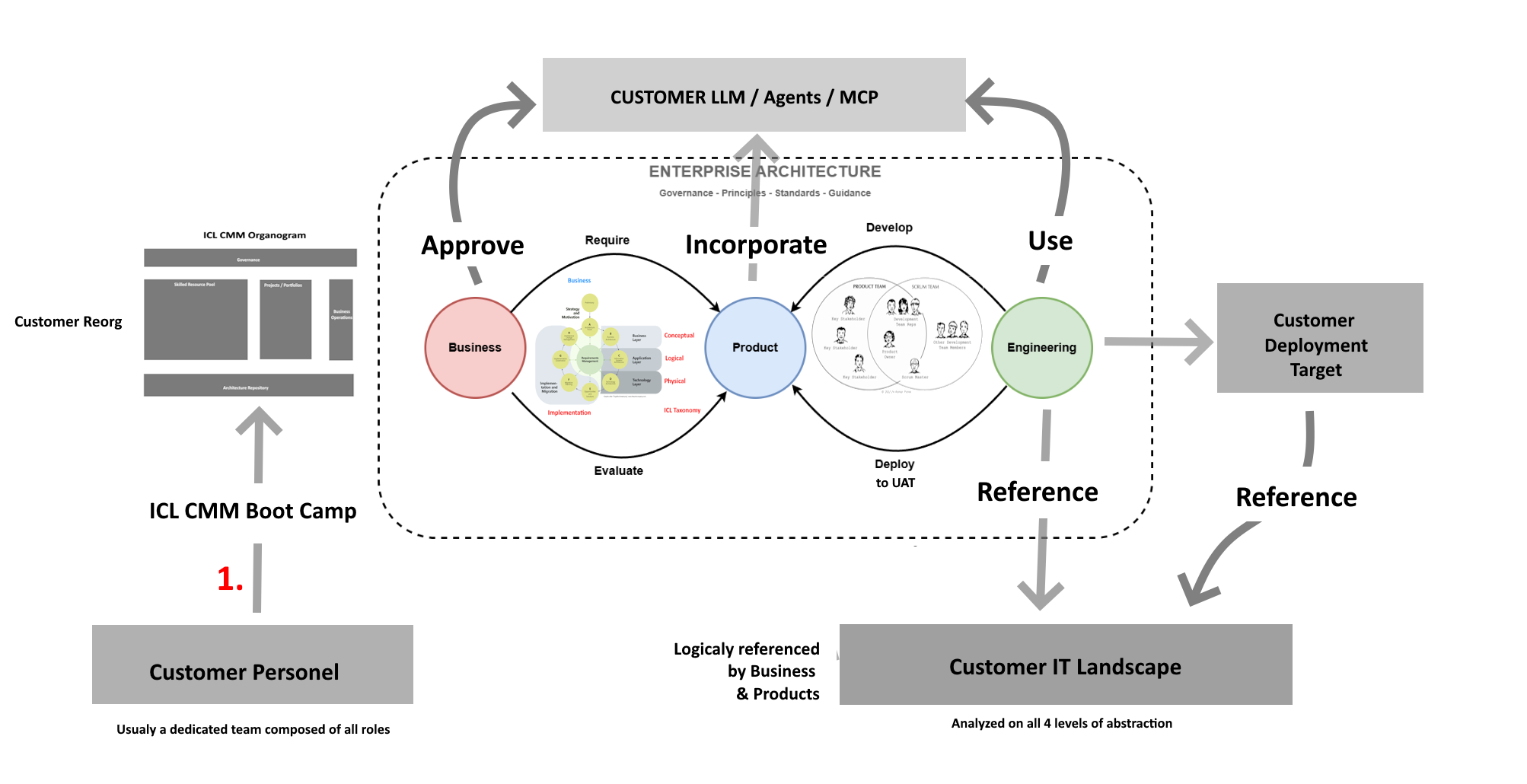
- dbj-bpt — Who owns delivery? (Business → Product → Technology loop)
- dbj-cmm — Is the org ready? (5-element maturity scoring, L0–L5)
- dbj-adm — How are decisions authorized? (5-step governance wheel)
Authoritative sources for all four: method.dbj.org (taxonomy_core.html, bpt.html, cmm.html, kb/DBJ_ADM/). If a skill and its source page ever disagree, the source page governs — flag the discrepancy rather than silently trusting the skill.
How to use#
Claude.ai (web/mobile): Settings → Capabilities/Skills → Upload custom skill → select one subfolder at a time (dbj-taxonomy, dbj-bpt, dbj-cmm, dbj-adm). Each upload must point at the folder, not the loose SKILL.md file, since the folder name is what disambiguates the four identically-named SKILL.md files.
Claude API: upload each SKILL.md as skill_data, then reference the resulting skill_id via container.skill_ids in a Messages request using the Code Execution tool.
Claude Code: register this repository as a plugin marketplace, then install each skill individually.
Once installed, no manual invocation is needed — Claude loads a skill’s frontmatter (name + description) automatically and pulls in the full body only when a request matches its trigger conditions.
“High delivery. Low hype. ROI next.”